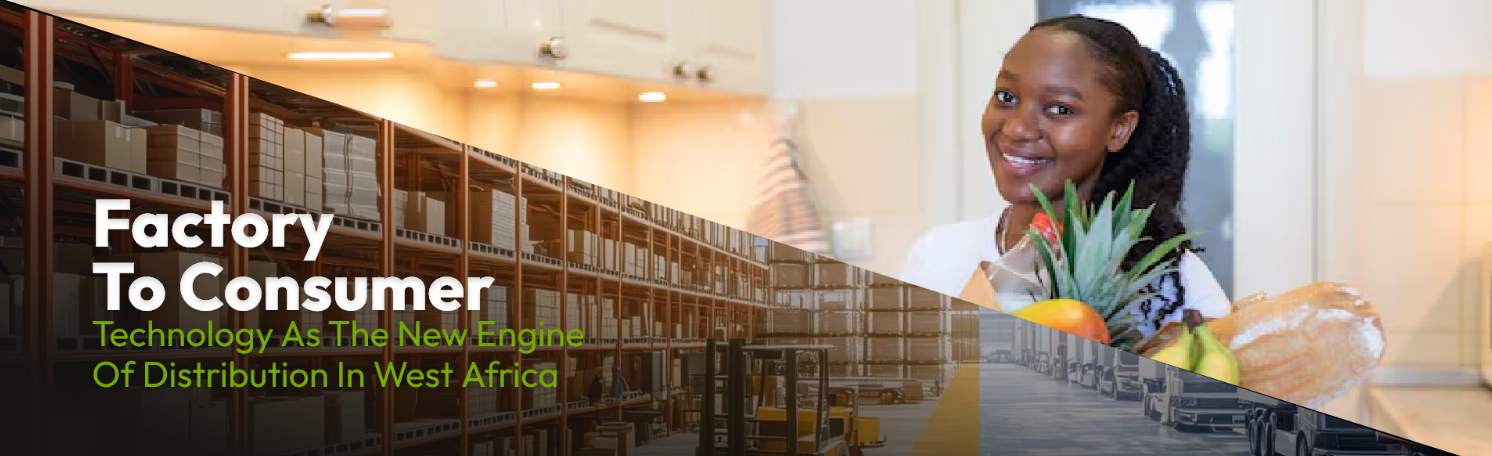
In 2024, inefficiencies in West Africa’s distribution networks cost consumer goods companies an estimated $2.5 billion in lost sales. Stockouts, counterfeit infiltration, and high logistics costs remain persistent challenges, even as the region’s consumer base continues to grow rapidly. With urbanization accelerating, over 200 million Africans are expected to move into cities by 2030. Manufacturers face mounting pressure to deliver products faster, cheaper, and with uncompromising authenticity.
The solution lies in Factory to Consumer (F2C): a transformative approach where manufacturers connect directly with end consumers through digitally integrated supply chains. Unlike traditional models, dominated by layers of intermediaries, F2C enables full visibility, optimized operations, and tighter brand control. For West Africa, this model represents not just a trend, but a critical lever for economic growth, competitiveness, and resilience.
Why F2C Is Urgent Now
Urbanization is Redefining Consumption: Rapid population growth and
urban migration are reshaping demand patterns, putting strain on legacy
distribution systems.
Consumers Demand Trust: Rising middle class consumers expect authentic
products, transparent pricing, and seamless access.
Margins Are Under Pressure: Manufacturers are fighting shrinking margins and
need new models to eliminate inefficiencies.
Technology is Closing the Gap: Mobile first tools, AI-driven planning, and real-time
logistics platforms are enabling emerging markets to leapfrog legacy
infrastructure constraints.
F2C is more than a supply chain trend; it’s a strategic imperative for manufacturers seeking to secure market leadership in the next decade.
The Three Tiers of Success
To fully unlock the power of Factory to Consumer (F2C), manufacturers must focus on three integrated tiers of execution powered by technology and data
1. Planning, Procurement and Manufacturing
Traditional planning models, based on historical data, no longer suffice in a region with volatile consumer behaviour and infrastructure gaps.
Tools: ERP systems, demand sensing platforms, farmer and supplier management solutions.
Impact: Accurate demand forecasting, minimized raw materials waste and improved agility in production planning.
Why it Matters: Manufacturers that invest in predictive analytics see up to a 15-20% reduction in stockouts and a significant boost in working capital efficiency.
2. Warehousing, Transportation and Logistics
Distribution inefficiencies remain a major driver of lost revenue and counterfeit penetration.
Tools: Trade Intelligence platforms, AI-powered anti-counterfeit solutions and real time fleet visibility systems.
Impact: Accurate demand forecasting, minimized raw materials waste and improved agility in production planning,
Why It Matters: Companies using digital fleet management in West Africa report 10-15% savings in logistics costs and stronger brand protection.
3. Distribution, Last-Mile Sales and CRM
Last mile delivery is where manufacturers either win or lose consumer loyalty.
Tools: Omni-channel commerce platforms, sales force automation and AI-powered promotions management.
Impact: Higher customer engagement, better promo ROI and increased loyalty.
Why It Matters: Direct to consumer brands that leverage CRM driven personalization see up to 2x repeat purchase rates compared to those relying on intermediaries.
Technology: The Non-Negotiable Backbone
The success of F2C hinges on real time data and integrated platforms. Without robust systems that connect procurement, production, logistics and customer engagement, direct to consumer distribution cannot scale effectively. West Africa's unique infrastructure and informal trade ecosystems make localized, tech-first approaches essential
Excite Panacea’s Role in Shaping the F2C Revolution
At Excite Panacea, we see F2C not as a passing trend but as the future of distribution in Sub-Saharan Africa. Our partnerships with manufacturers, distributors, and retailers are built on three core pillars:
- Visibility: Enabling complete supply chain transparency from factory floor to retail shelf.
- Velocity: Optimizing planning and execution to cut delays and costs.
Trust: Leveraging AI-driven anti-counterfeit and authentication solutions to protect brand integrity.
Through localized innovation and deep market expertise, we help businesses bridge global best practices with the realities of African trade, unlocking sustainable growth and competitive advantage.
The Road Ahead
For West African manufacturers, adopting F2C is no longer optional. The companies that embrace digitally integrated supply chains today will lead the market tomorrow, capturing loyalty, improving profitability, and safeguarding their brands.
This transformation won’t be achieved in isolation; it requires ecosystem collaboration, innovation, and bold leadership.
Excite Panacea is committed to partnering with forward thinking businesses to define and lead this next era of distribution
Follow Excite Panacea Limited for insights from our Factory to Consumer series and explore how your organization can thrive in the evolving West African retail landscape